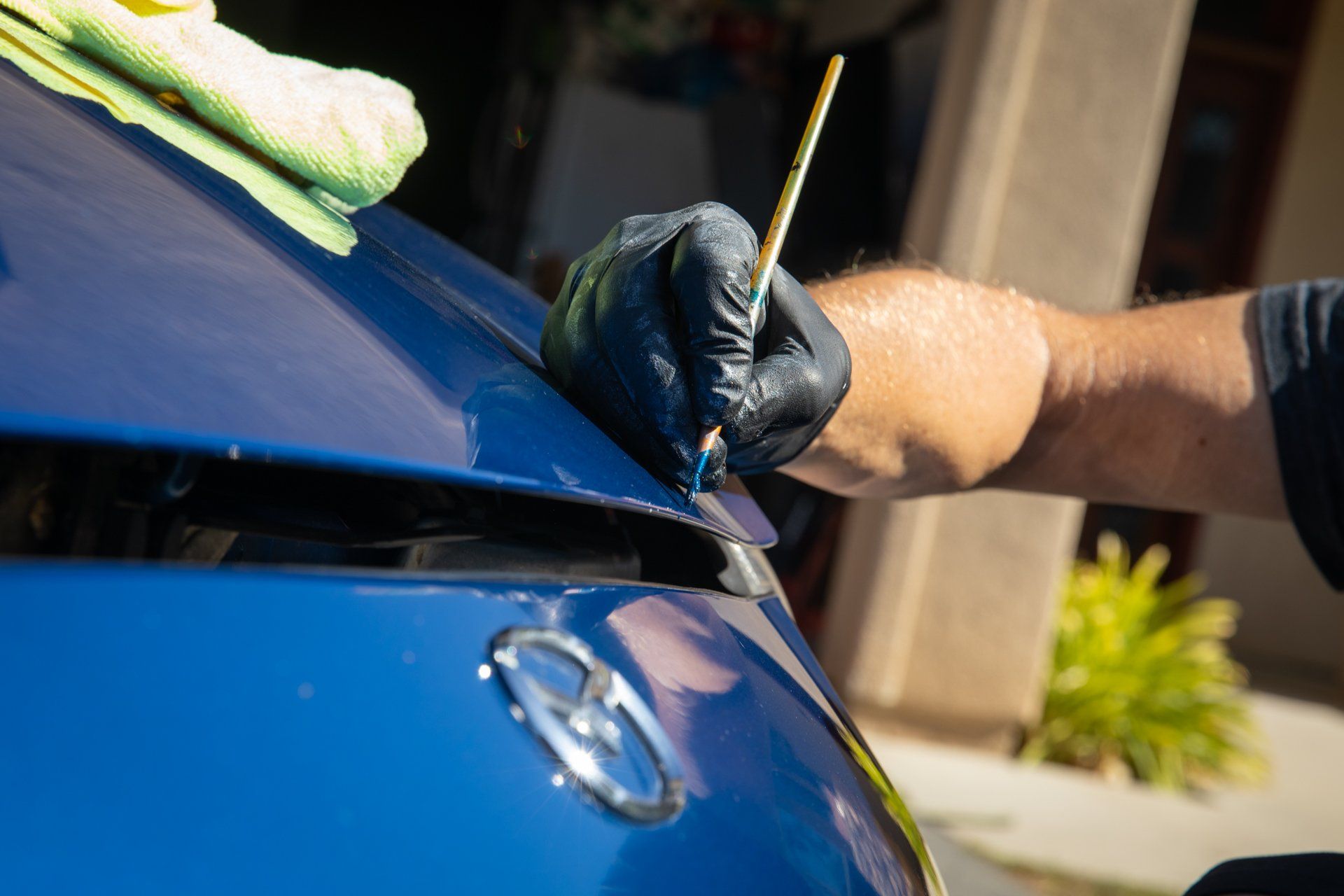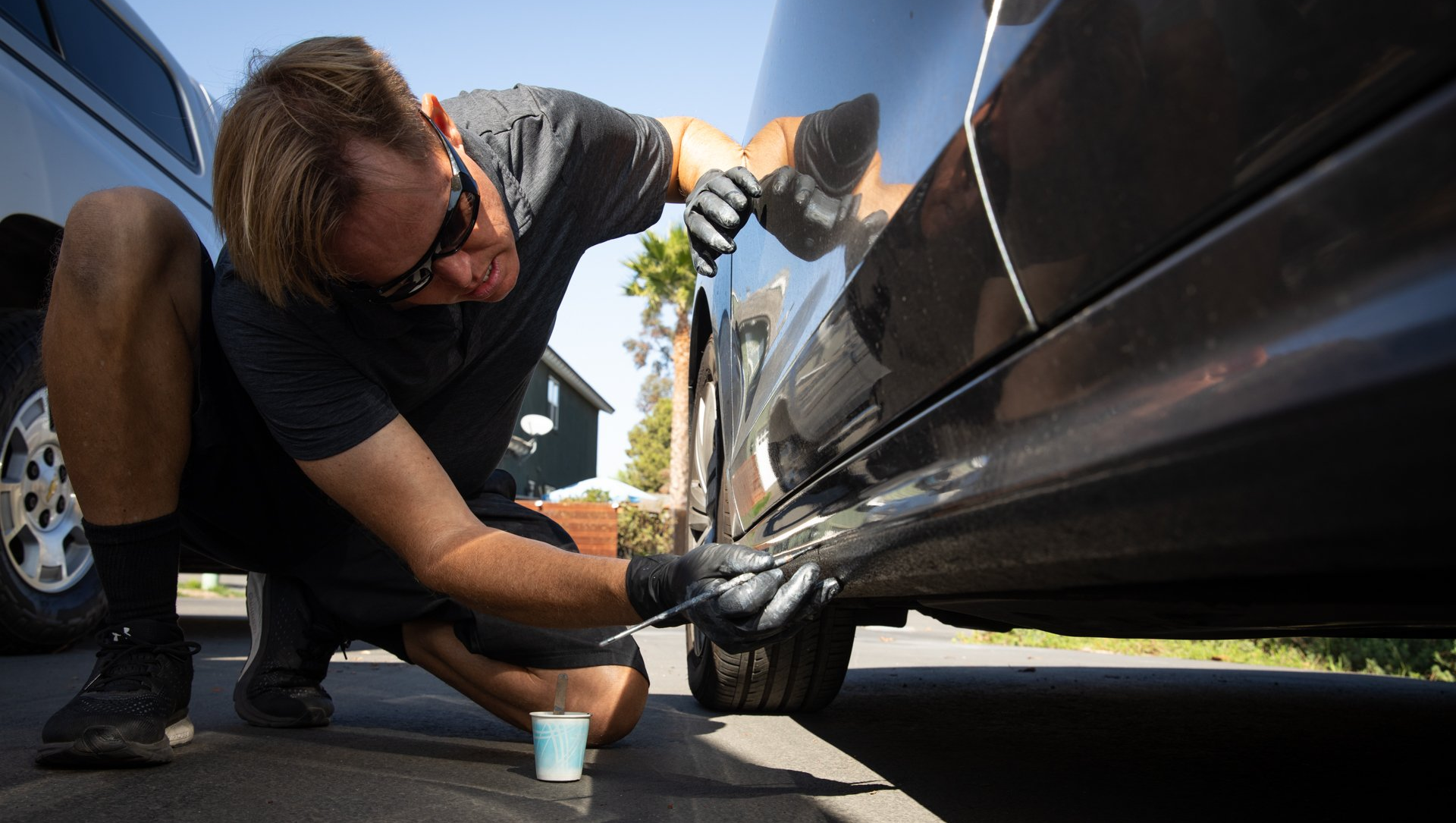
Repairing paint damage before the rainy season protects your car from rust, bubbling, and peeling that start when moisture reaches exposed layers. A mobile auto paint service makes it easy to get the repair done, since the technician comes to your home or workplace. The catch is that paint work needs dry weather, so the best time to book is before the rain arrives, not after.
Why Rain Season Is Hard on Damaged Paint
Your car’s finish is a layered system: clear coat on top, then color, then primer, then the metal panel beneath. A chip or scratch that cuts through those layers lets water reach the primer or bare metal. From there, a few things can happen:
- Rust can begin on steel panels, then spread underneath the surrounding paint
- Paint can bubble or lift around the damaged spot as moisture gets under it
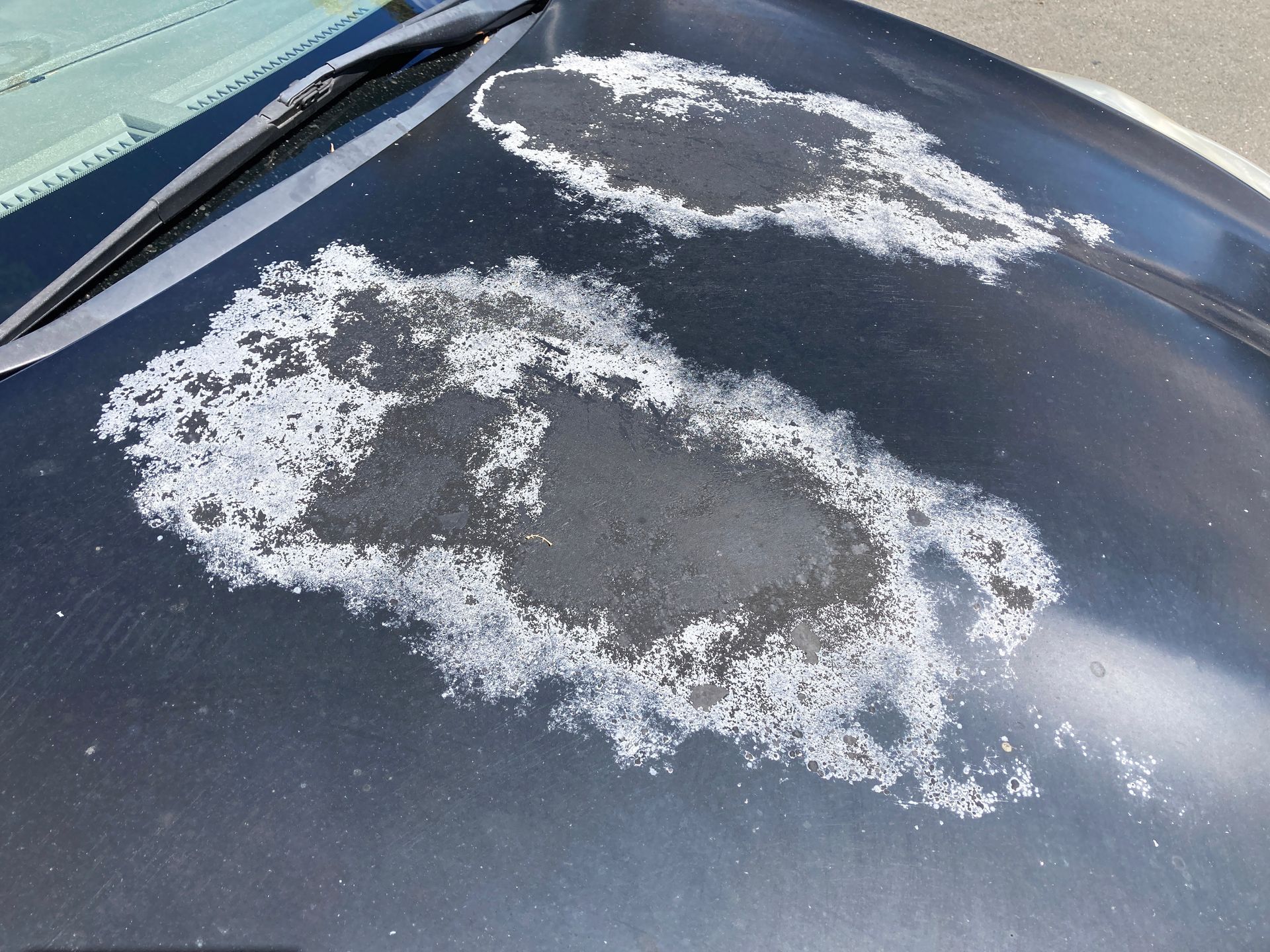
- Clear coat can peel and flake, especially on surfaces already weakened by sun
- Small damage grows into a larger, more expensive repair
- Cracked bumpers can collect water and let moisture reach areas behind the cover
San Diego doesn’t get constant rain, but long dry stretches followed by wet weather, plus coastal humidity and salt air, are enough to speed up damage that’s already there.
Types of Paint Damage Worth Fixing Before the Rain
- Rock chips on the hood, bumper, and mirrors
- Scratches that have gone through the clear coat or down to primer
- Scuffs and scrapes on bumpers and door edges
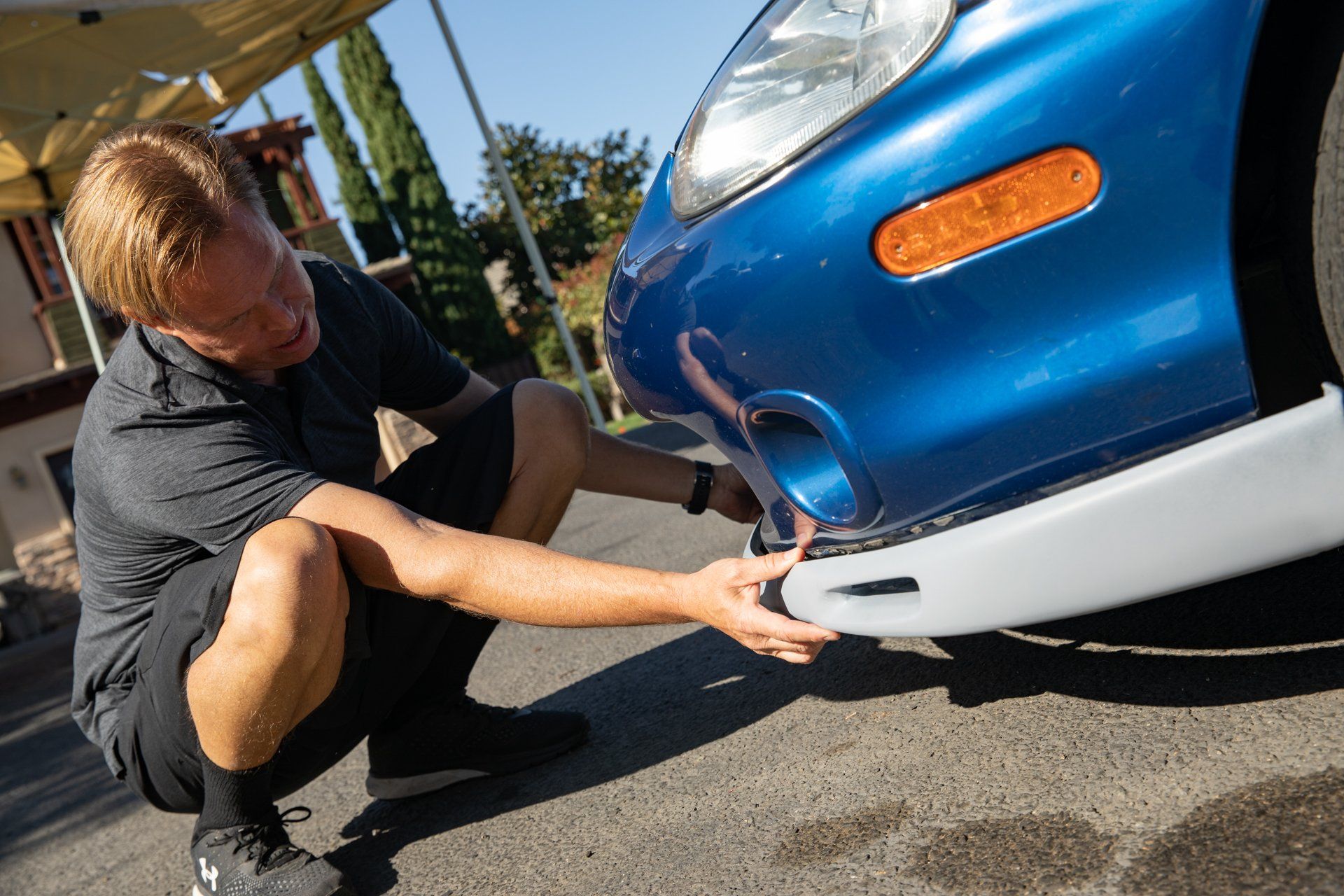
- Cracked or gouged bumper covers
- Peeling, faded, or failing clear coat
- Small rust spots or rust bubbles starting to form
- Dings and door dents where the paint has cracked
If you can feel a scratch with your fingernail, or see a different color or bare metal inside it, it’s worth addressing.
How Mobile Auto Paint Repair Works
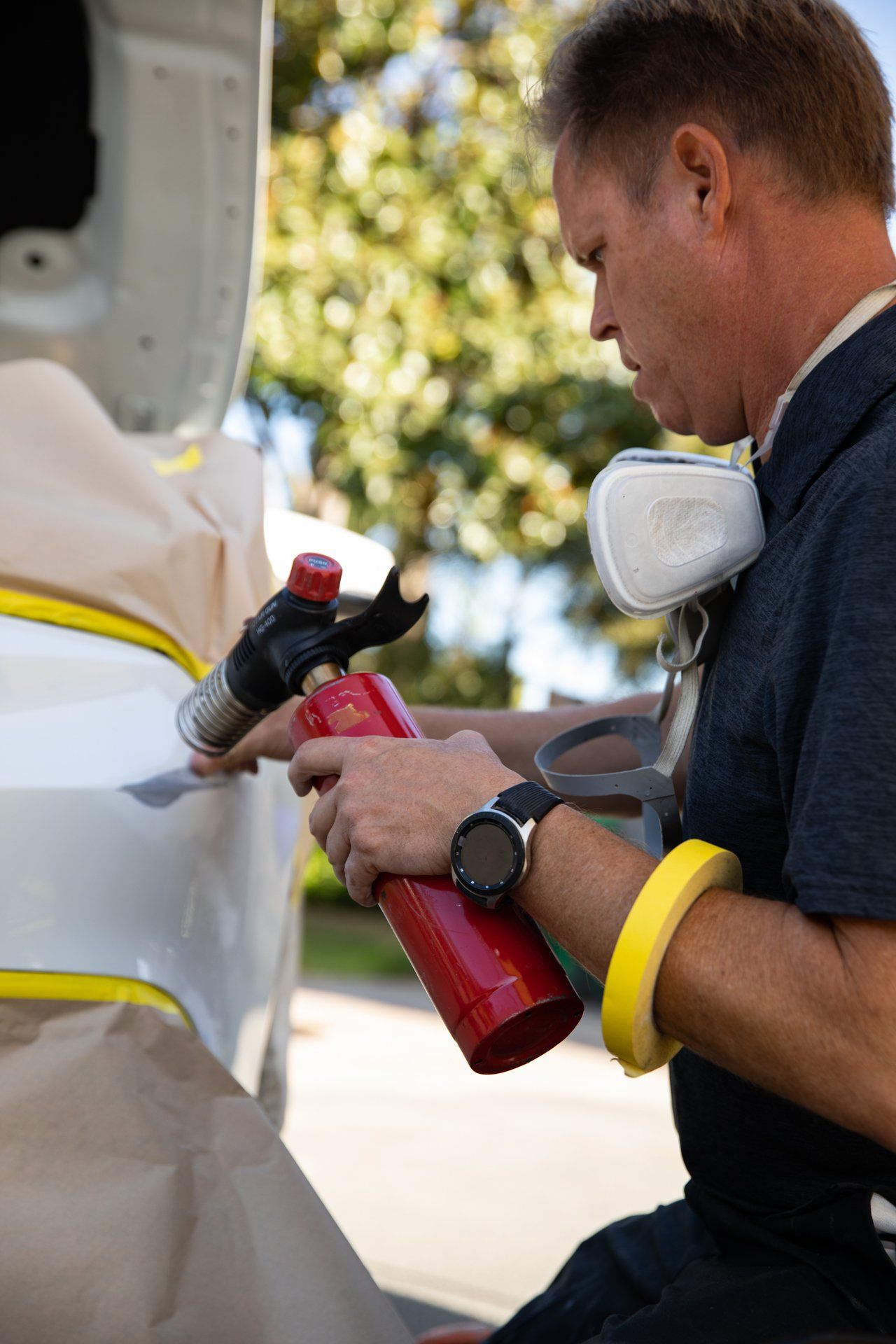
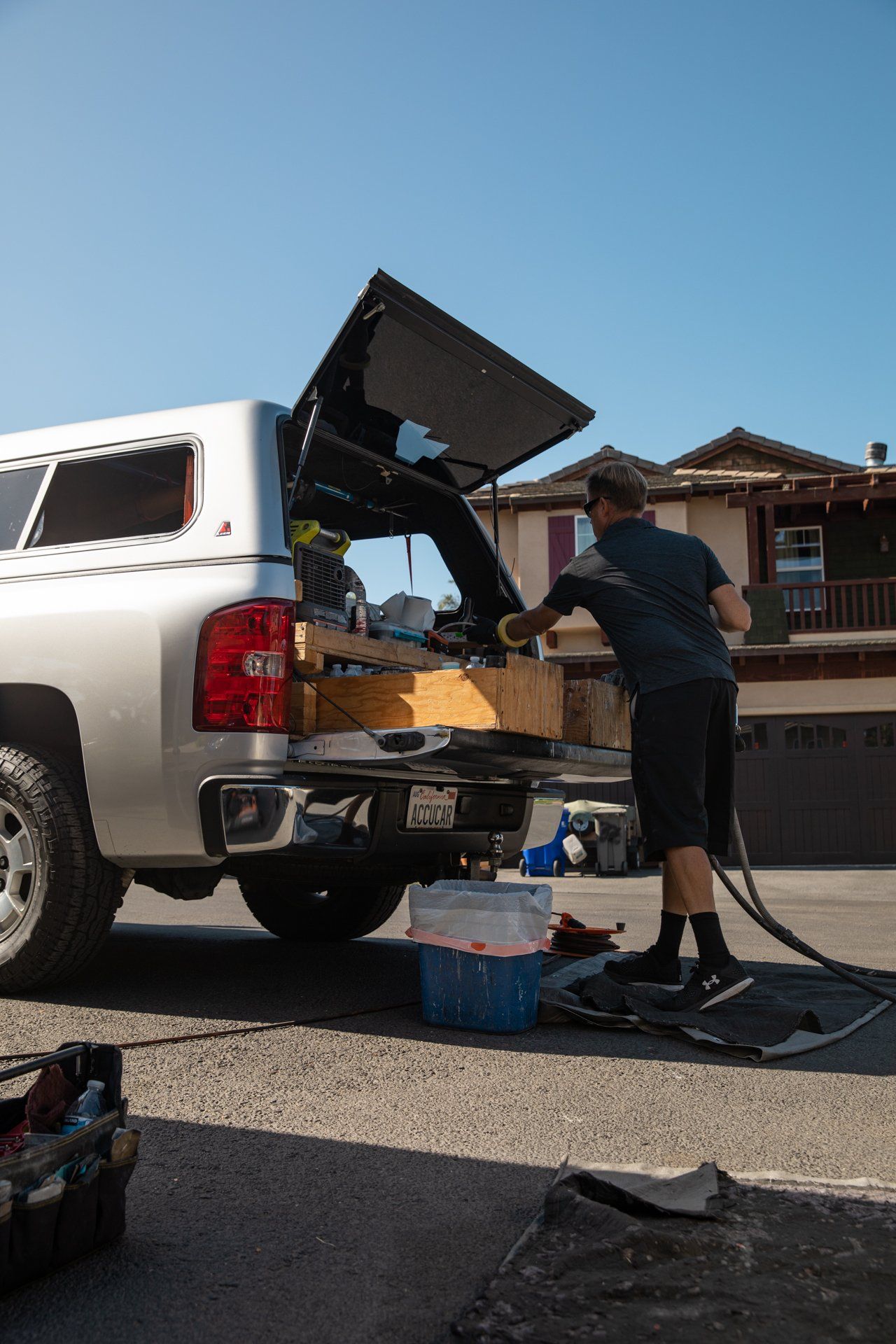
Mobile paint repair uses the same core steps as a shop repair, performed from a fully equipped service unit parked at your location:
- Assessment and quote. The technician inspects the damage and explains what’s needed.
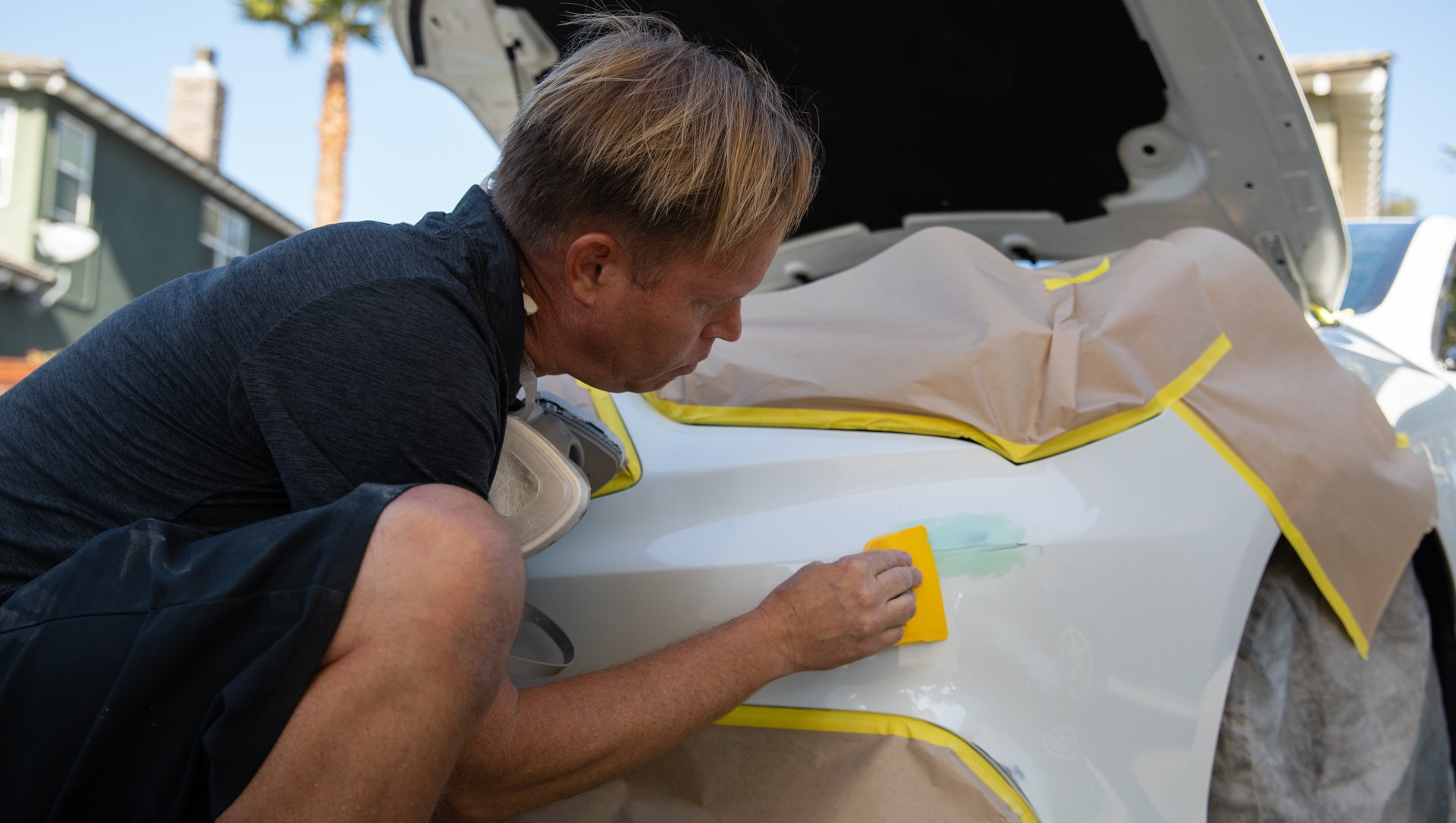
- Cleaning and prep. The area is cleaned and sanded, and any rust or loose paint is removed.
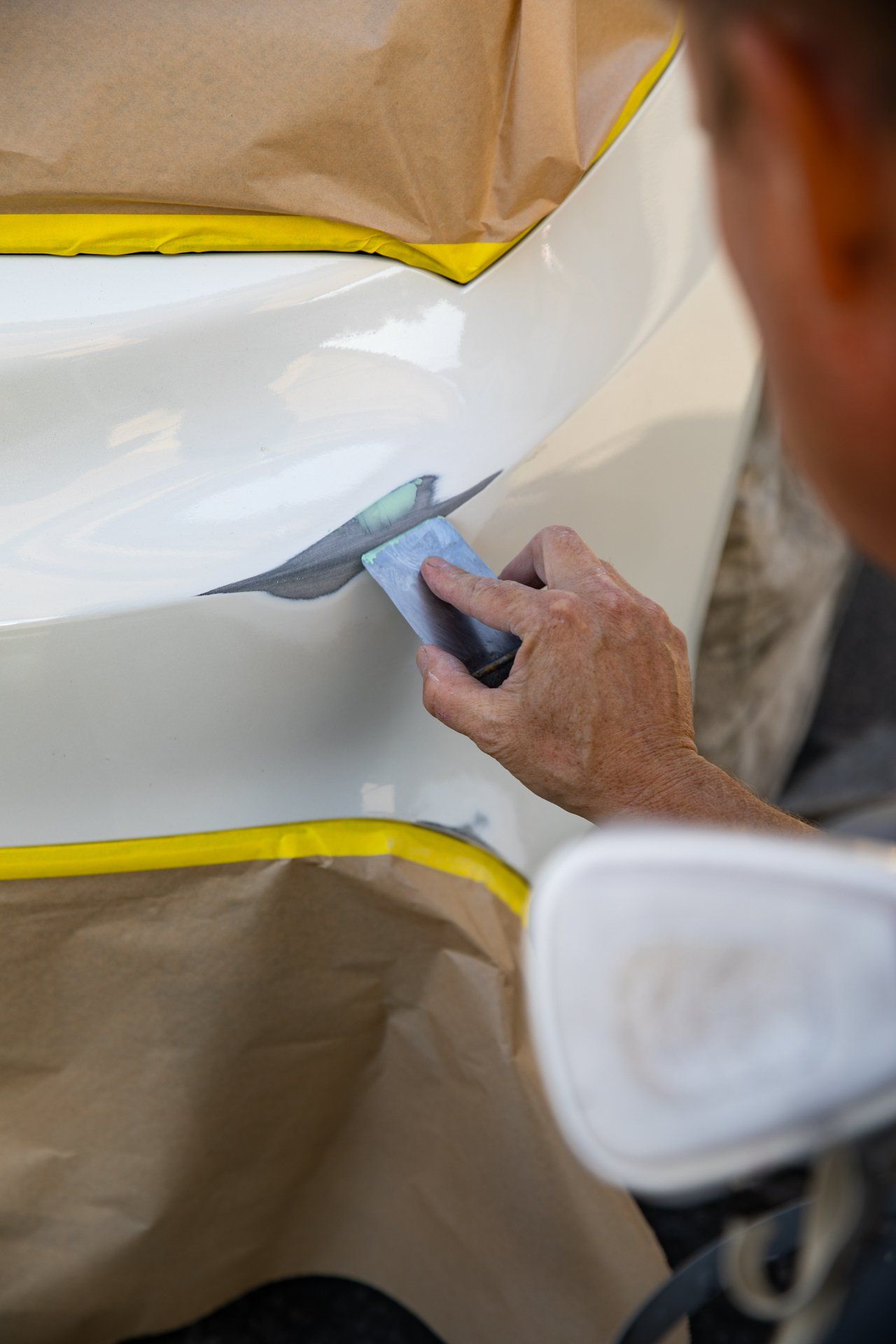
- Filling and smoothing. Chips, gouges, and imperfections are filled and feathered so the surface is smooth.
- Color matching. Paint is matched to your vehicle’s factory color so the repair blends in.
- Primer, color, and clear coat. Layers are applied and blended into the surrounding finish.
- Curing and finish. The repair is allowed to set and is finished for a seamless look.
What Mobile Paint Repair Can and Can’t Do
Mobile service is ideal for the kinds of damage most drivers deal with: chips, scratches, scuffs, bumper repair, and minor dents and dings. It’s fast, convenient, and often more affordable than a traditional shop.
It isn’t the right fit for everything. Major collision damage, structural repairs, and full-vehicle repaints are better handled in a body shop. A good technician will tell you honestly which category your damage falls into.
Weather also matters. Paint needs dry, stable conditions to apply and cure properly, which is why mobile repair can’t happen in the rain.
Protect Your Paint After the Repair
A few habits help the finish last through winter:
- Wash your car regularly to remove road grime, salt, and bird droppings
- Apply wax or a paint sealant for added protection
- Park in a garage or shade when possible
- Check for new chips and touch them up early